For a multi-unit or franchise restaurant, your facilities management strategy needs to intentionally address these challenges at every level of your organization.
blog
July 17th, 2026
Team Ecotrak
7 Tips for Multi-Unit and Franchise Restaurants Managing Facilities at Scale
Operations requires managing people, equipment, and uncertainty—and it is usually a bumpy road. Smoothing out these bumps in the road, at scale, is a challenge.

Challenges of Managing Facilities at Scale
Running a successful restaurant is difficult; running restaurants at scale is even harder. You need to scale every element of your business, from your food prep to your customer service. For your operations teams, facilities maintenance needs to be multiplied across all locations.
The fundamental challenge of restaurant facility management is in the details. Your facilities have multiple critical systems and pieces of equipment that need to work day in and day out. Everything from coolers to HVAC to landscaping contributes to the business. And every person, whether location managers, repair technicians, or the headquarters facilities management team, needs to work together on different tasks.
Your restaurant facilities management strategy needs to cover not only day-to-day processes at individual locations, but also long-term decisions for the multi-unit or franchise organization as a whole.
Tips for Managing Multi-Location Restaurants
Your goal is to build processes that create continuity and consistency, at every location of your restaurant. Here are a few tips to help you get there.
Any process that is time consuming is worth streamlining (even if it takes investment)
With a few locations, a cumbersome operations process might be annoying but doable. However, any investment in automated workflows can help reduce maintenance costs across your organization as it grows. Tools like a Computerized Maintenance Management System (CMMS) can streamline the most time-consuming and manual parts of daily operations activities. For example, a maintenance-centric platform is built to facilitate work order management, repair spend monitoring, Preventive Maintenance scheduling, warranty due diligence, and more. Removing friction in your processes will pay dividends at scale.
Centralized records enable organization at scale (because scattered records cause chaos)
One of the biggest challenges with managing separate locations is tracking dozens or hundreds of details, but keeping all updates in one location. When details are in spreadsheets on someone’s desktop computer, or only known by a location manager who quit last month, facilities management needs to chase down information rather than focus on the fix. A CMMS can serve as your “filing cabinet” for the entire organization, providing a repository for everything from repair histories to warranty periods and preventive maintenance standards. With one source of truth, everyone from a newly-hired technician to a long-time director can find the same facilities history, every time.
Transparent communication supports systems and promotes accountability
A small organization can get away with decisions in text threads and phone calls. But for companies managing facilities at scale, you need communication to be tied to a central record. Particularly for work order management, location staff, external vendors, and central facilities managers need to be able to view the same information. And when there are so many “cooks in the kitchen”, a centralized record also promotes accountability because communication gaps can be identified and addressed.
With customization, reporting can be a useful tool for every type of stakeholder
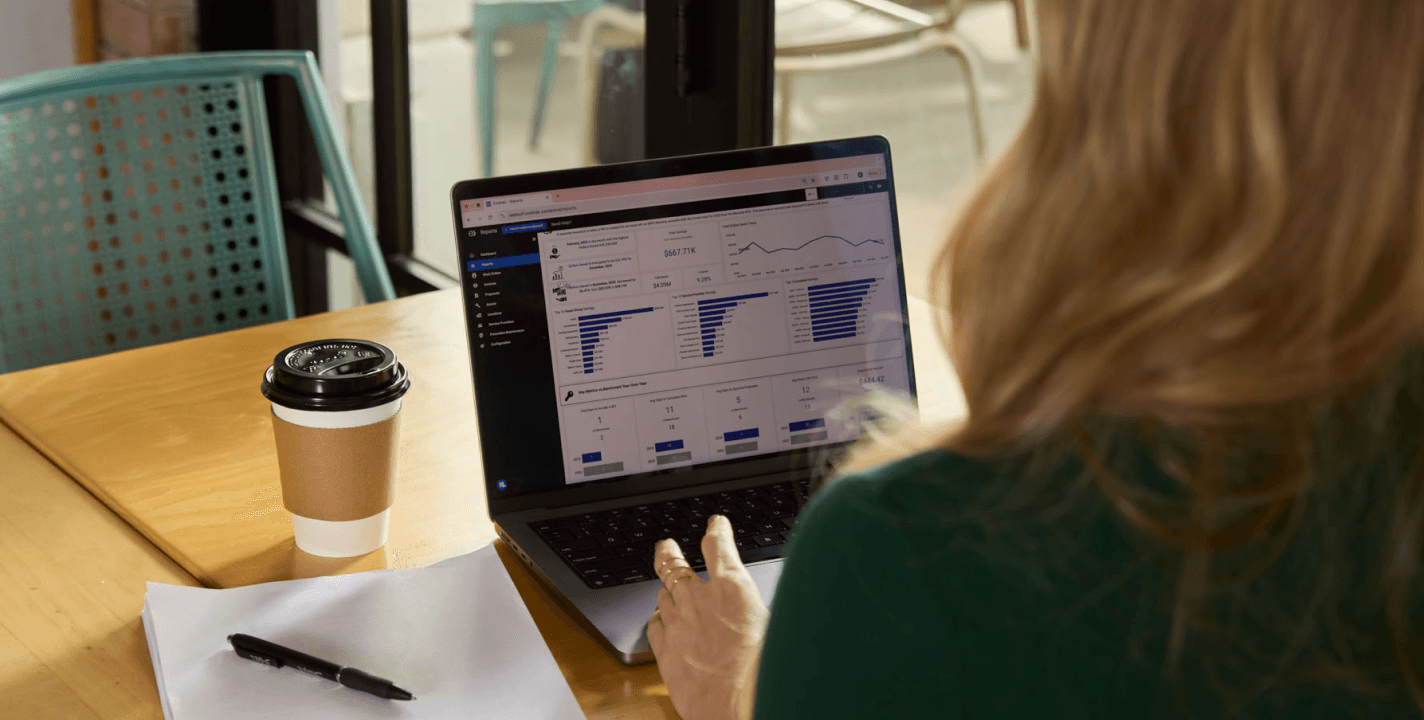
A franchise restaurant has many different stakeholders, all of whom need different data for their daily roles. A technician in the field needs to be able to pull relevant history for a specific piece of equipment, and your facilities management team to be able to pull portfolio-wide reports to look for priorities and escalations. Location managers can benefit from location-specific dashboards with KPIs about their facility, and your accounting team might value a live snapshot of budget spend. Robust reporting capabilities, powered by accurate data and up-to-date information, can support every level of your organization.
Give your internal tech team or regional vendor network the tools they need
Muti-location facilities management depends on internal and external maintenance team members who may be spread out regionally. Make it easy for your field teams, internal or external, to communicate with the central facilities team on one platform. Leverage CMMS tools to speed up work order scheduling with automated assignments and dispatching. As technicians are usually on the go, ensure all of the tools your field teams need to use are also mobile friendly, allowing for work order updates from a phone or mobile inspection forms. And if your franchise restaurants grow to new regions, CMMS platforms like Ecotrak offer a vendor directory of vetted contractors to help you build out your new network.
Don’t allow proposals or invoicing headaches disrupt operations workflows
When you’re tackling paperwork at scale, any inefficiency can start to become a limiting factor. Your team may need to review proposals, coordinate spare parts deliveries, or approve invoices, and these activities can be time consuming when done manually. Consider investing in streamlined approval workflows over the full lifecycle of proposal to work order to final invoice. Proposal evaluation tools and defined workflows can help your team keep work orders moving forward. Invoice processing should be automated and centralized, with your vendors able to submit invoices directly on a single platform integrated with your accounting software to automate GL coding.
Support big picture strategy, not just individual location logistics
In facilities management, dealing with the small issues can take up your entire day before you know it, and your tools need to drill down into equipment-specific insights. However, as a facilities manager, defining the big picture for your entire portfolio is critical to your long-term success. Accurate, consistent data allows you to create organization-wide actionable insights about everything from repair spend and equipment lifecycles to vendor work order response times and return on investment for PMs. Your facilities management tool needs to do it all: empower location-level maintenance activities, and zoom out to the big picture of maintenance strategy.
Ecotrak’s CMMS solution empowers multi-unit and franchise restaurant managers to operate facilities at scale with minimal headache. Contact us to learn more about how Ecotrak can streamline and automate your facilities management.
Related Content
webinars

Facilities Unfiltered: Gene Davis of Mendocino Farms
View
blog

Best CMMS Software for Restaurants & Food Service
View
videos

Mastering Facilities Management: Technician & Service Provider Management
View
webinars

Facilities Unfiltered: Nic Stoyer of bartaco
View
blog

Q2 2026 Ecotrak Roadmap: Product Enhancements and What’s Next
View