blog

June 16th, 2026

Team Ecotrak

Best CMMS Software for Restaurants & Food Service

Anyone who works in restaurants and food service knows that there are a lot of unique challenges to running a successful business in the industry.

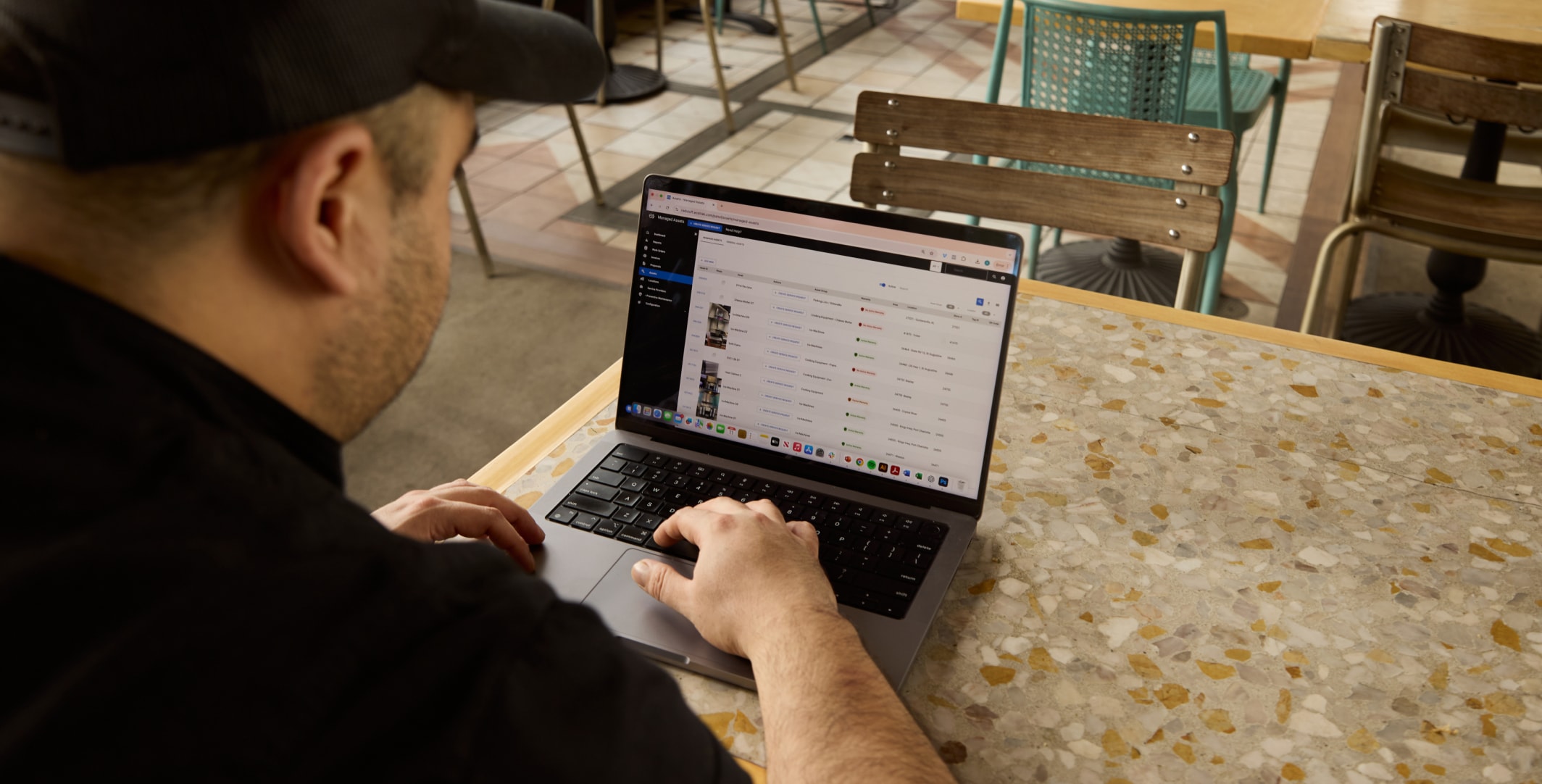
A person in a cap checks equipment inside an industrial room with metal shelves and kegs, using a tablet for reference.

Anyone who works in restaurants and food service knows that there are a lot of unique challenges to running a successful business in the industry. Your organization is always on the lookout for the best: the best produce vendor, the best POS system, the best branding, the best staff, and more.

When it comes to facilities management and specific tools, like a CMMS, your strategy of finding the best should be no different. Here, we’ll explore what makes up the best CMMS software solution for restaurants and food service.

What operational challenges do restaurants face?

Restaurant and food service teams face unique challenges that impact how operations function:

Equipment is both high-use and critical: Restaurant equipment undergoes a lot of daily wear and tear, and kitchen design usually doesn’t include redundancy (you probably don’t have a spare walk-in cooler on site). So if something breaks, the failure is likely a costly service interruption, and urgency is high for a quick repair.

Staff on the frontline of facilities are busy: Store-level staff are on location and can flag facilities issues, providing valuable insights or troubleshooting support. However, these staff spend most of their time on their core responsibility: customer service and fulfillment in front of house or back of house. Facilities and equipment maintenance is normally a small part of their role, so any facilities activities need to be easy to complete.

Location-level managers juggle lots of administrative work: From scheduling staff to managing inventory and communicating with food vendors, managers have a lot of day-to-day administrative work that competes with facilities management projects. The less time managers can spend in the back office on operational tasks, the more likely they are to complete them.

The restaurant industry has high turnover: Throughout the entire restaurant industry, employee retention can be a huge challenge. With high turnover rates, critical experience and knowledge about facilities can walk right out the front door at any time. If facility maintenance is disorganized or piecemeal, maintenance teams can be bogged down trying to constantly get managers or technicians up to speed.

Solving operational challenges: What is a CMMS?

A CMMS is a Computerized Maintenance Management System, a technology tool that can track information about equipment and facilities to simplify how your company manages maintenance.

Essentially, a CMMS functions as a centralized location for everything related to maintenance, creating the foundation for restaurant and food service operations. Data about work orders, equipment history, maintenance schedules, and part inventory lives in one place in the CMMS, rather than spread out across email threads and spreadsheets on someone’s desktop computer. Teams can transparently organize maintenance tasks and schedules, leading to more efficiency, accuracy, and accountability in operations.

What can a restaurant CMMS do for the operations team?

The best CMMS software for restaurants and food service companies will provide improvements for the operations team, such as:

Centralize asset tracking: Scattered files and information buried in email or text threads lead to communication delays. A CMMS can function as the “source of truth” for your organization, tracking asset lifecycle, from acquisition to replacement. Warranty tracking can be referenced quickly, and service providers can pull from recorded equipment history rather than someone’s memory.

Improve work order management: A CMMS allows work orders to be created, assigned, tracked, and automated without manual coordination. And with asset history compiled within the CMMS, technicians can reference the case history and provide new updates seamlessly.

Automate preventive maintenance: A modern CMMS designed specifically for restaurants and food service helps standardize preventive maintenance activities. The facilities team can create predefined maintenance schedules for inspections and service, which automatically generates work orders. Regular maintenance helps prevent downtime and extend an asset’s useful life. In addition, logging these records provides valuable insights into equipment performance to identify recurring issues.

Streamline vendor management: Restaurant facilities use a wide range of equipment assets that come from many different manufacturers and may require different maintenance vendors. A CMMS allows operators to work with multiple vendors with ease, pulling performance history from one centralized location and linking communication from dispatch through invoicing in the same system.

Facilitate part inventory: Without a robust inventory strategy, repairs can be delayed due to part orders or delivery lead times. A CMMS offers inventory functionality, allowing your facilities team to keep track of spare part supplies and facilitate faster repairs.

Provide (actionable!) insights: A CMMS provides useful information about maintenance operations, with detailed reports about equipment, work orders, repairs, invoices, and other analytics. These insights can be used to help you monitor operations, make budget decisions within the organization, and inform discussions with vendors.

Take operations on the go: Restaurant and food service staff are busy. The best CMMS solution will be mobile-friendly, so store and maintenance teams always have access to the CMMS. Team members should be able to access work orders, provide status updates, and get asset information from smartphones or tablets.

Results to look for with a CMMS built for restaurants

More efficient operations: Data entry, manual work order creation, and scheduling are time-consuming, and automation allows your team to devote resources elsewhere. A CMMS can automate tasks and streamline coordination, empowering your operations team to focus on high-impact items rather than routine work.

Improved asset lifespans and reduced costs: Better upkeep and maintenance plans can extend asset lifespan, lowering overall maintenance costs and reducing downtime service interruptions.

Less time spent on chasing down records: Finding a vendor contact, a repair date that’s hidden in emails, or an invoice that’s in someone’s desk drawer: these tasks seem small individually, but even a task that takes a facility manager 20 minutes per day adds up to 80 hours per year. With one referenceable CMMS record, time can be spent more on action items, and less on administrative record searching.

Reliable source of truth: Make your facilities “turnover proof” with centralized CMMS records, so that there is no loss of knowledge if someone leaves the organization. Recordkeeping within the CMMS becomes even more robust over time, building the future foundation for identifying big-picture trends and data-driven decisions about performance.

Easy, useful reporting: Traditional reporting involved hours spent formatting spreadsheets and manually gathering data. CMMS reporting pulls from existing workflows to create real-time dashboards and analytics visibility. Create custom reports about key performance indicators (KPIs), covering topics from work order completion rates to maintenance costs or equipment downtime by location, to make more informed decisions, faster.

The best CMMS for restaurants and food service?

At Ecotrak, we are building a CMMS solution designed for restaurants and food service, built for specific facilities headaches. Founded by experts with 40+ years’ experience, Ecotrak delivers asset-first facilities management for 250+ brands across 15,000+ locations.

Related Content

Newsletter

KEEP UP WITH US