blog

June 1st, 2026

Team Ecotrak

The 2026 Facilities Management Landscape

Business as usual doesn’t work in a constantly-changing operational environment. Successful facilities management in 2026 will require strategic responses to new trends and challenges.

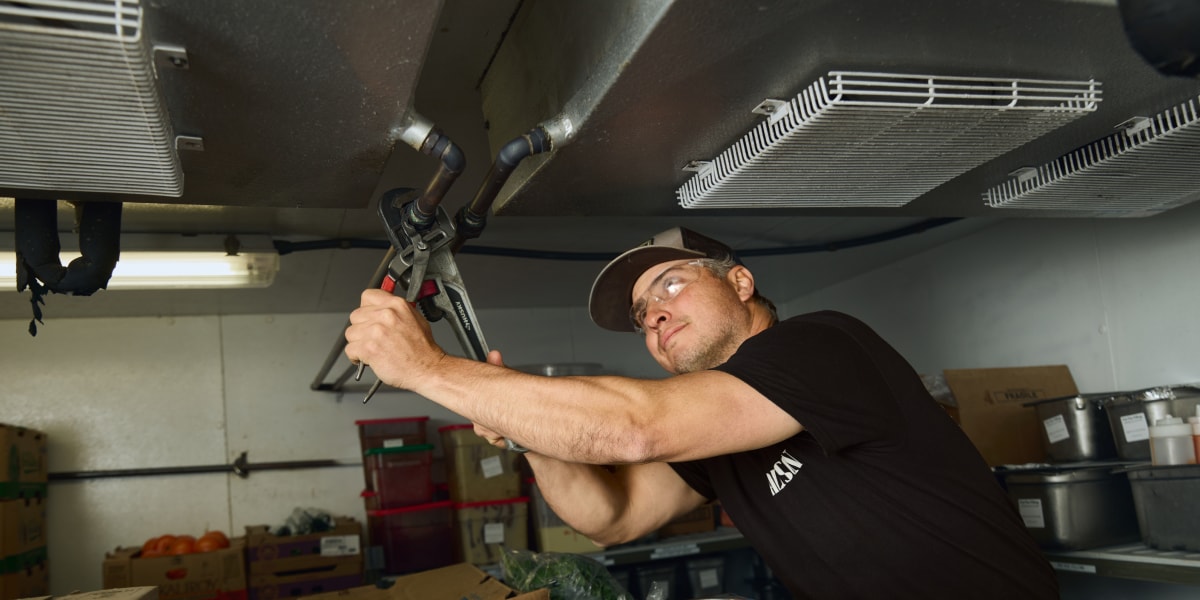
A man wearing a cap uses tools to repair pipes on a ceiling in an industrial setting, surrounded by boxes and equipment.

Business as usual doesn’t work in a constantly-changing operational environment. Successful facilities management in 2026 will require strategic responses to new trends and challenges. Founded by experts with 40+ years’ experience, Ecotrak delivers asset-first facilities management for 250+ brands across 15,000+ locations.

The survey participant data in this white paper pulls from a wide range of respondents, polled by Ecotrak, in service-related industries such as restaurants and convenience stores. This report focuses on repair and maintenance costs, technologies, and labor force outlooks for these facilities management professionals. We’ve also included information from our internal customer reports, drawing insights and trends from our rich repository of facilities management data on the Ecotrak platform.

Some of the key takeaways we found about the current state of facilities management:
  • Doing more with less: According to our survey, nearly 60% of respondents do not anticipate budget increases for facilities in 2026, and about 30% report budget increases only for Preventive Maintenance spend. And yet, nearly every cost component of facilities management is expected to continue increasing. To adapt, operators are finding new efficiencies in 2026 and beyond.

  • Service remains a focus: Getting timely, efficient, and effective service continues to be a top priority for facilities managers. To meet growing facility needs, many organizations are exploring a hybrid service model, using a mix of internal technicians and a service provider network (as we predicted in last year’s 2025 report!).

  • Growth is powered by data: Facilities management teams struggle when processes remain manual but companies are adding locations or performance metrics. Investing in high-quality, up-to-date data visibility across the organization is becoming essential for strategic reporting and decision making.

  • Technology tools give breathing room: When resources are crunched, organizations are leveraging technology to make teams more productive. From exploring AI-powered functionality to streamlining administrative tasks with centralized platforms, organizations are relying more on software tools. However, most organizations believe there is room for improvement in their technology operations.

This report sheds light on the headwinds facilities management and retail operations teams may face in 2026.

We’re here to tackle these challenges with you.

Matt Singer, CEO of Ecotrak

Survey Respondent Profile

Ecotrak, a leading enterprise facility and asset management platform, conducted a national survey of facilities management professionals across a range of industries. Survey participants ranged from Site Administrators and Facilities Operations Managers to Director of Facilities and C-Suite professionals. Most participants were in the food service and restaurant industry, with other industries like retail and convenience stores represented. The professionals surveyed averaged 10-20 years of experience in the facilities management industry, and they managed anywhere from 10 to 700+ locations.

Vendor & Service Provider Network Trends

Respondents reported that they generally prefer local service provider vendors, but use national vendors depending on the trade or regional market. These professionals indicated they prefer strong relationships with local vendors because of better response times, more competitive pricing, and more reliable service. Overall, operators report high satisfaction with their service provider network, averaging a rating of 7.75 out of 10.

Headcount Strategy & Service Provider Dynamics

Although only about ⅓ of respondents use internal technicians, they reported that in-house team members generally perform better than third-party vendors, “caring more” about outcomes and communicating more effectively about repairs. Most respondents staff on a case-by-case basis, factoring in urgency level and other details. Few respondents used a centralized dispatch in 2026.

Adapting Facilities Strategy in 2026

Workflow Management & Performance Pressure Points

Facilities management professional report challenges such as:

  • Slow service provider response times and inadequate follow up

  • Repairs requiring multiple visits to complete, low first time fix rates

  • Tracking inventory in stock and on order

  • Maintaining timely proposal and invoice processing

  • Clear communication about technician dispatching and field monitoring

  • Scaling company processes and staffing growth

Operating Adjustments, Staffing & Labor Shortages

External vendors: Many respondents indicated they were struggling to find vendor coverage for their equipment, whether it was basic plumbing and general contracting or specialized equipment like beverage dispensers. 80% of respondents indicated they are willing to pay more for a faster service response time.

Internal Staffing: Most organizations do not have challenges with staffing internal roles, with nearly 90% of respondents claiming they are not experiencing labor shortages within their organization. However, for those with high staff turnover rates, they mentioned the difficulty of constantly training new hires.

Only 25% of respondents have planned team changes in 2026, such as creating new operations roles and spreading the workload across more headcount. Most don’t anticipate team expansion in the coming year.

Financial Outlook & Budget Strategies

For the few operators anticipating overall budget increases, they specified funds for large asset replacements in HVAC and refrigeration. About a third of respondents indicated their new budget increases are solely for implementing or expanding a PM program

Resource Allocation: During the budgeting process,

  • About 60% of professionals consider age of location or equipment/planned replacements

  • 50% of professionals consider historical trends

  • About 40% of professionals consider sales/volume

For deciding the budget for repair versus preventative maintenance, some participants follow a set formula (such as 50/50 or 75/25 repair and preventive maintenance), and others report basing decisions on equipment age or how essential it is to core operations.

A Look At Ecotrak Customer Reports

As of the third quarter of 2025, the National Restaurant Association acknowledges modest improvements but reports that “inflation remains sticky” in the food service industry. According to Restaurant News Resource, “All told, the economic signals remain mixed, and this likely reflects the heightened degree of uncertainty among both consumers and businesses.

Until the fog clears, the economic outlook will be somewhat muted”. To understand trends in inflation and asset groups, the Ecotrak team pulled together reports from the repository of customer data processed on our platform. First, we examined the year-over-year cost inflation increases on total invoice spend, labor costs, and material costs between 2021 and 2025.

  • Takeaway: Average total spend continued to increase in 2025, although at a slower pace than 2024.

    Average total spend increased 2.4% overall, compared to a nearly 13% increase in 2024. Material cost rose steadily at 4%.

  • Takeaway: Average labor cost continues to increase year over year.

    Labor cost increased about 10% between 2024 and 2025, which is similar to the 12% increase between 2023 and 2024.

Next, our Asset Group report drilled down into the spend, labor, and material costs broken down by asset types.
  • Takeaway: After steady increases 2021-2024, average invoice totals are starting to level out or slightly decrease in 2025. The 2023-2024 period experienced large 10+% spikes in invoice totals, and that trend has begun to modestly decrease.

  • Takeaway: Average labor cost continues to increase across all areas, sometimes significantly. Labor in areas like cooking equipment, HVAC, plumbing, and refrigeration is increasing anywhere from 4-19%. Cooking equipment repair labor tops the list, jumping 19% between 2024 and 2025.

  • Takeaway: Average material costs are a mixed bag, with some areas leveling out in 2025 after steadily increasing between 2021-2024. Plumbing and cooking equipment materials experienced their first cost decreases since we started tracking this data in 2021. However, HVAC and refrigeration material costs experienced 4-10% increases.

Technology Adoption & Innovation

Opportunities For Technology Use

75% of respondents believe there are specific insights or data available through technology that would support daily decision making. Examples include location spending trends, part availability, and live spending totals

Respondents also gave examples of ideal, automated daily or weekly push reports that would be helpful in facilities management:

  • Work order insights, such as summaries by location or urgency ratings

  • Invoice spend by location, brand, and in comparison to budgets

  • Spending by asset, highlighting equipment failure root causes

  • KPIs for service provider metrics

  • Equipment downtime in comparison to equipment make or model

Role Of Technology

To meet operational goals, respondents are leveraging CMMS, Smart IoT Sensors, and other software for tracking, reporting, and even predictive maintenance decision-making.

Nearly 90% of respondents reported using data from the CMMS software to present to supervisors. This CMMS data covered monthly and total asset spend, details about work order counts and statuses, and asset performance.

60% reported using sensors or planning to use sensors in locations to measure temperature, humidity, water pressure or other metrics, and would want to consolidate sensors into the CMMS to automate work order creation. Respondents indicated an interest in using technology to predict equipment failures, help plan preventive maintenance, make repair vs replace calculations, and proactively stock part inventory.

However, respondents clarified that to fully feel confident in relying on autonomous technology tools for predictions, they would need visibility into history log trends, or an added layer of facilities management approval before work orders are issued.

Emerging Tech Trends

About 75% of respondents (up from 61% in 2024) indicated that if available, their team would use a product like ChatGPT in their CMMS to enhance workflow efficiency and automate decision-making. Primarily, facilities professionals were excited about the possibility of using AI for equipment troubleshooting, as well as basic custom repair and labor cost reporting.

Strategic Recommendations For Facilities Management Leaders

The data in this white paper reflects the challenges that lie ahead in 2026, but these trends also represent new opportunities for growth.

Strategic Recommendations

Find efficiencies to keep facilities management powering revenue: To adapt to tightening budgets, operations teams should focus on finding efficiencies in processes wherever possible, particularly related to equipment lifecycles and service provider spend. However, this approach should be balanced with investments in operations. Facilities management is not just a cost center; operations are the foundation for revenue generation.

Invest in diverse internal and external service provider relationships: In a changing economy, operational resiliency may require varied options for repairs and maintenance. Explore what mix of specialized internal teams and external vendors (local or national) might optimize your R&M spend and equipment uptime.

Put quality data in, get quality decisions out: The better the data, the better the decisions that can be made with the data. It can be challenging to track the dozens or hundreds of data points for assets at your facilities, but these details can help operators identify trends and find new opportunities. If your organization struggles with unified reporting, implementing tools like a CMMS platform can help centralize information and make it accessible for decision-makers.

Take advantage of technology tools: Busy operators can benefit from the continued improvement of technology tools in facilities management. Instead of convoluted email threads and messy spreadsheets, companies are partnering with platforms like Ecotrak to create centralized data repositories and automations for manual processes. And building on advances in AI, in 2025 Ecotrak launched EMA, Ecotrak Machine learning and Artificial intelligence, to help operators take advantage of AI-powered efficiencies right within the platform.

Future Outlook For The Industry

Although 2026 will bring headwinds, your organization can find success with a thoughtful and strategic approach.

How will your organization adapt to facilities management challenges in 2026?

One Platform To Manage Repairs

Ecotrak provides Facility Management Software to help businesses of all sizes simplify facilities and asset management.

At Ecotrak, we’re more than just a tech solution. We’re your partner in the trenches, working side by side to keep your business running smooth, day after day. From preventing breakdowns to optimizing operations, we help you plan for the long haul. Our tools don’t just give you data—they give you actionable insights so you can make decisions that matter. With real people and real support, you’re never in this alone. Together, we run it.

Real support, real solutions—because we’ve been there. We’re not just about fixing things—we’re about keeping them running.

Running a business is tough enough without having to worry about what’s going to break next. That’s where Ecotrak comes in. We’re here to keep your facilities running smoothly, with real-time data and insights that help you make smarter decisions. We handle the hard stuff—tracking assets, optimizing repairs, and making sure nothing falls through the cracks. With Ecotrak, you can stop putting out fires and start planning for the long haul. Together, we’ve got this.

Run a smoother operations - no sweat, no surprises. Book a demo today.

Related Content

Newsletter

KEEP UP WITH US