news

July 27th, 2026

Team Ecotrak

What is the Role of a CMMS in Healthcare Facility Management?

Healthcare facilities management is the backbone for operations in hospitals, health systems, clinics, outpatient centers, and laboratories.

Person using a laptop in a cafe, browsing a website with tables and data. Background shows empty chairs and tables.

Healthcare facilities management is the backbone for operations in hospitals, health systems, clinics, outpatient centers, and laboratories. Healthcare maintenance managers, facility directors, and operations teams work hard every day to ensure healthcare facilities never skip a beat, so medical teams can focus on quality care for patients.

However, healthcare operations come with many challenges across building maintenance and equipment management. Repairs across hospitals, research labs, or clinic facilities need to be completed quickly and efficiently, as deferred maintenance grows and becomes more costly over time. Healthcare budgeting can be strict and spend needs to be predictable. In addition, facilities management in healthcare competes with other industries for skilled maintenance teams.

Finally, healthcare facilities are required to operate with strong accountability. Whether an offline HVAC unit or a malfunctioning imaging system, any equipment issue has the potential to disrupt care. Maintenance records need to also be ready for compliance, with data about inspections, repairs, and preventive maintenance the foundation for audit reporting.

You can’t manage maintenance data reliably across multiple locations with spreadsheets, paper checklists, or email. And without reliable maintenance data, you increase downtime and increase the bottom line maintenance spend. Reactive or unorganized maintenance plans aren’t enough when equipment failure can impact budget, compliance standing, and patient care.

Role of a CMMS in Healthcare

Healthcare organizations can address the challenges of facilities management with tools like a Computerized Maintenance Management System (CMMS). A CMMS is a maintenance-centric platform that allows the facilities team to operate more efficiently, centralizing information and simplifying workflows.

A CMMS in healthcare facility management is the central hub for all maintenance activities for the medical equipment and building infrastructure that supports patient care.

A CMMS tracks maintenance data, which allows you to monitor asset performance and drive smarter decisions over time. The CMMS platform can automate workflows and streamline all communications, reducing delays or errors caused by manual oversight. It also is the central record for consolidating histories and inspection activities, critical for audits. Simpler workflows and real-time data allow central facilities teams to monitor multiple locations at once, understanding exactly where service delays, costs, or downtime is occurring.

What Can a CMMS in Healthcare Facility Management Do?

Work Order Management

A CMMS platform empowers location-level staff to easily submit maintenance requests. With centralized work order maintenance records, you can track progress and also ensure accurate data is captured for future use. Critical items, based on risk to patient care or cost, can be prioritized appropriately. And with streamlined processes and automation for assignments or scheduling, your healthcare facilities team can focus on high-impact tasks instead of repetitive administrative work.

Equipment Management

High asset uptime directly impacts patient experience. Your facilities teams need to track everything from diagnostic machines to electrical systems to medical equipment, across all of your healthcare locations. A CMMS provides one central repository for tracking the entire lifecycle of an asset, from installation to retirement or projected replacement date. Track in-warranty or out-of-warranty maintenance activities, so you can make the best decisions about spend and integrate spare part inventory tracking.

Preventive Maintenance (and Predictive Maintenance)

Preventive maintenance (PM) is standard best practice in facilities to improve asset performance and prolong equipment life. A CMMS can automate tedious PM scheduling, assigning tasks on designated schedules and tracking completion data. In addition, predictive maintenance (another PM) capabilities are growing in the facilities industry, which leverages data to flag condition-based equipment risks. Predictive maintenance shifts reactive fixes to proactive maintenance activities that can help prevent equipment disruptions before they happen.

Vendor Management

Use your CMMS to streamline vendor onboarding across locations and assign trusted vendors to certain facility workflows. A CMMS can streamline communications with a central source of truth, allowing you to seamlessly communicate work order details. Your team can develop set workflows for proposal or invoice approvals, taking away paperwork delays and lightening the load for your field teams. And a robust CMMS solution will also offer a service provider directory, with vetted reviews and information so you can find the right vendor for the job.

Asset Data Visibility for Technicians

Any CMMS built for healthcare will have mobile-first functionality, allowing technicians to view work orders in the field through a user-friendly mobile app. Equipment records need to be regularly referenced for both preventive or corrective repairs, and technicians can update or close out work orders from where they are in the field before moving on to the next assignment. Your CMMS can also store manuals or other troubleshooting documentation, helping empower first-time fixes no matter the technician.

Multi-Site Visibility and Reporting

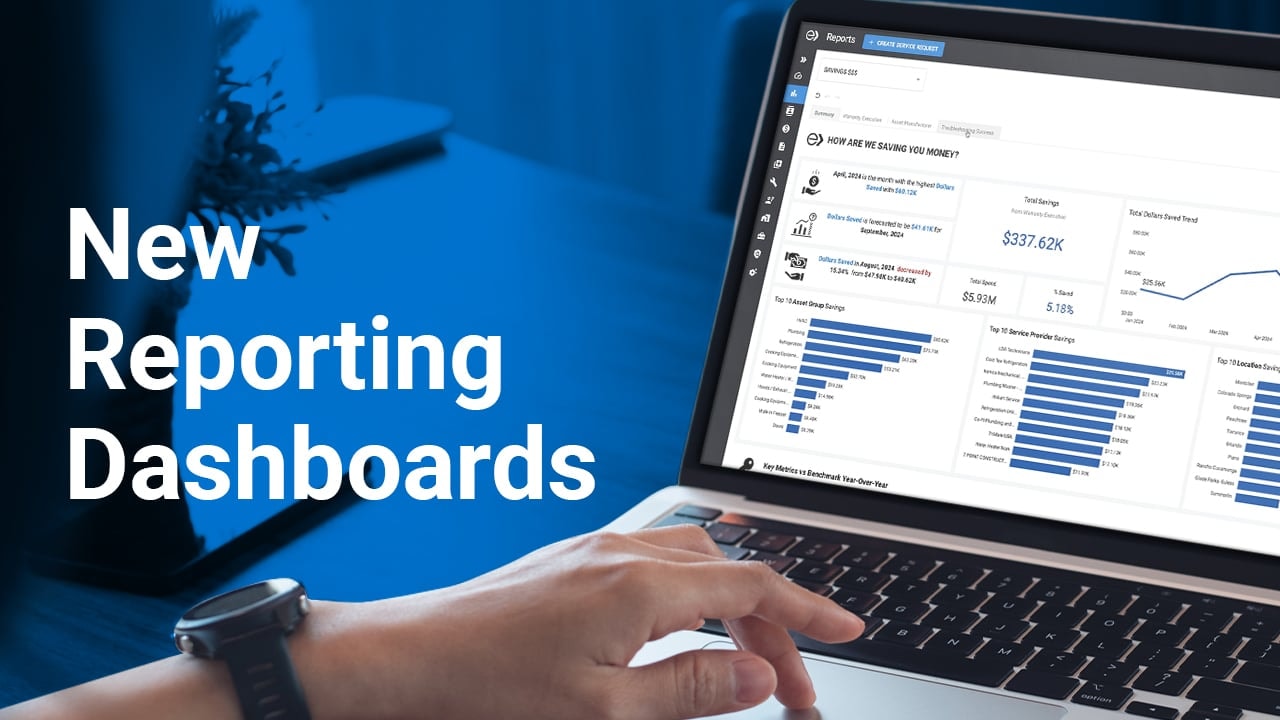
To ensure every location meets your operational standards, you need to track your spend, asset performance, and vendor efficiency across your full network of practices. A CMMS helps you drill down into data, visualizing trends in equipment performance or maintenance costs. Whether your healthcare organization is a few clinics or a full hospital network, different departments in your healthcare organization can build custom reports and dashboards for their most important metrics. If you operate multiple facilities, you can also integrate data about the entire portfolio so that you can benchmark facilities across one another.

System Integrations

Your CMMS may need to link with various enterprise tools or equipment and building management software. A CMMS like Ecotrak can connect the CMMS platform with your EMR/EHR, ERP, or practice management systems for seamless data flow.

Results of a CMMS in Healthcare Facility Management

One of the most important aspects of facilities management is ensuring that healthcare facilities meet requirements for patient and staff safety and accountability. Healthcare is a heavily regulated industry, and a CMMS platform allows you to document inspection schedules, safety and regulatory checklists, and reports that can be accessed whenever needed. A CMMS allows you to remain compliance-ready for any audit.

Ultimately, your healthcare facilities management strategy needs to empower top-tier patient care. Streamlining the everyday facilities management tasks improves operations over time, and data consistency empowers your team to do their jobs effectively.

Ecotrak’s CMMS platform supports the needs of your healthcare facilities management team. Want to see Ecotrak in action? Book a demo today.

Related Content

Newsletter

KEEP UP WITH US